
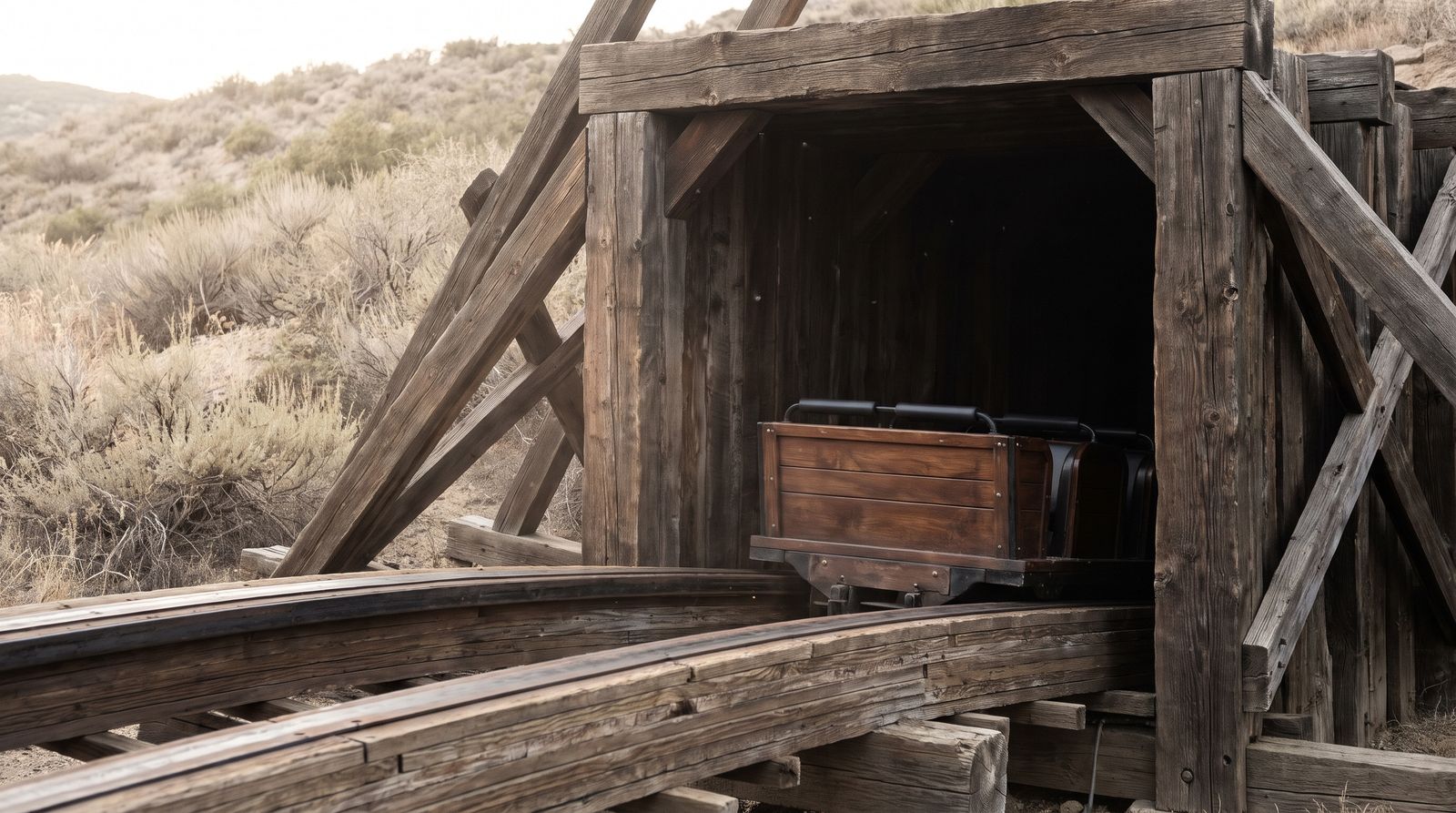
Wooden coasters usually avoid going upside down, because timber and inversions make uneasy companions. A theme park outside Rome is about to try it anyway, and it has put the train underground on either side of the roll for good measure.
What happened
MagicLand, the park at Valmontone near Rome, unveiled Durango at IAAPA Expo Europe 2026 in London on 22 September. The park’s press release describes a “next-generation authentic” wooden coaster themed around the Old West gold rush, named after the Mexican state of Durango and its mining heritage. It opens in spring 2027, and the park says it represents an investment of €15 million.
The ride is designed and built by The Gravity Group, the American wooden-coaster specialists, working with Martin & Vleminckx, the Canadian firm that delivers the project. The two were announced as partners in January 2026, when the opening was given as March 2027; the September release says only “spring”. We will treat March as the target and spring as the commitment.
The detail
Everything below is the park’s own figure unless stated.
| Durango | |
|---|---|
| Type | Wooden sit-down coaster |
| Height | Approx. 30 m (98 ft) |
| Track length | Almost 1 km (0.6 miles) |
| Airtime moments | 13 |
| Near misses | 6 |
| Tunnels | 2, both underground |
| Inversions | 1 (a zero-G roll) |
| Track | Gravity Group Pre-Cut Track, laminated timber |
| Train | Timberliner |
| Cost | €15 million |
| Opening | Spring 2027 |
The park has not published a top speed or a drop height. RCDB lists a top speed of 50 mph (80 km/h) and a chain lift hill, which fits the 30 m height, but those figures are not from the park, so we are not putting them in the table.
The park makes three claims worth reading carefully. It says one tunnel will be the longest underground tunnel on a wooden coaster in Europe, that the ride will be the only wooden coaster in Europe with an inversion, and that it is the only one of its kind in Italy. We have not independently checked a European inventory of wooden coasters, so these are the park’s claims, not ours. The Italian claim is the safest: the release says “only one of its kind in Italy”, not “first ever”.
What it actually means
Start with the roll. A zero-G roll is an inversion in which the track twists through a full turn while the train crests a hill, so riders float against their restraints instead of being pinned. It is a gentle sort of inversion, and the sustained weightlessness is the point of it.
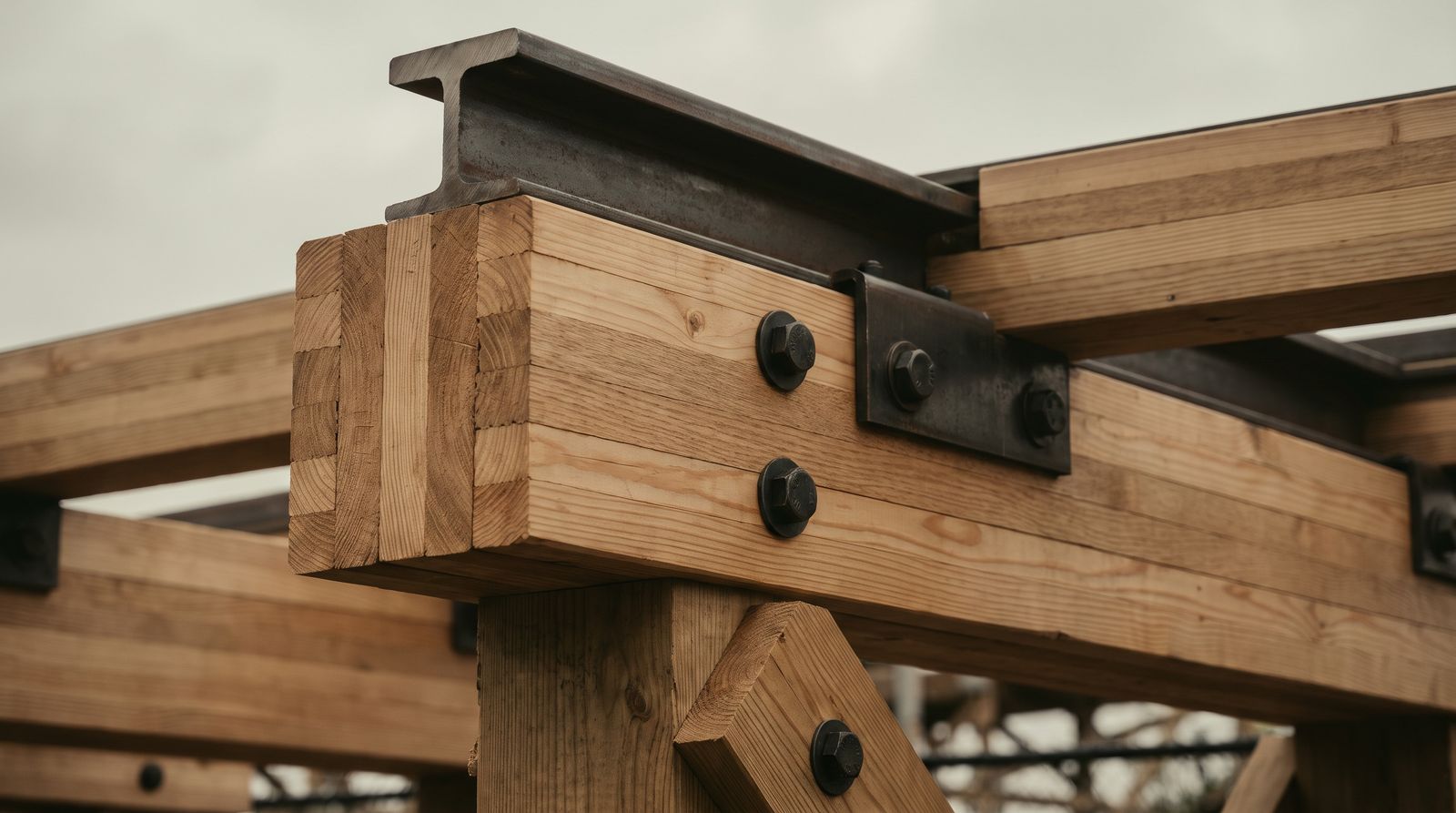
On a steel coaster that is routine. On wood it is harder, because the track is a stack of laminated timber boards under a steel strap, and as our wood versus steel explainer sets out, it flexes as the train passes. A roll demands a precise, repeatable twist in the track. That is where the Pre-Cut Track comes in. The park’s release says it is being used in Europe for the first time on a newly built coaster, and Italian coverage of the launch describes the benefit as millimetre-level assembly precision. In plain terms, the laminations are cut in a factory to the final geometry rather than shaped by carpenters on site, which is the kind of consistency an inversion needs.
Why do it? Our reading, not the park’s stated reason: wood is a hard sell against steel on thrill alone, so the way to compete is to offer something steel can do easily and wood rarely has. Airtime is wood’s home ground, and 13 moments of it suits the material. The roll and tunnel combination adds a headline that the park’s marketing can use.
The tunnels deserve a sober note. They are theming, but they are also a structural and operational feature: a train in a tunnel is out of sight, so the ride’s safety systems have to do more of the watching. Every modern coaster runs on a block system that keeps trains apart, and a long tunnel makes that invisible reliability matter more. The park has not said how many trains it will run, so capacity is unknown.
The builders have form. The Gravity Group is one of the few firms still building wooden coasters from scratch, and the manufacturer picture in our guide to the coaster builders shows how small that club is. What we cannot yet judge is how a wooden roll rides in practice, because the park has published no ride data and the coaster has not opened. Smoothness through the inversion is the thing to watch in the first season.
The Dispatch verdict
A sensible bet and an unusual one. Italy gets its wooden coaster from specialists, with a feature list chosen to suit the material rather than fight it, and the zero-G roll is a risk worth taking. What we do not yet know is the speed, the drop, the capacity or how smooth it feels. Judge the roll in spring, not in the press release.
Further reading: what wood, steel and hybrid track actually change, how block systems keep trains apart, our guide to the manufacturers, how lift hills work, and why Parc Astérix is putting steel rail on the wooden coaster The Gravity Group rebuilt in 2022.